

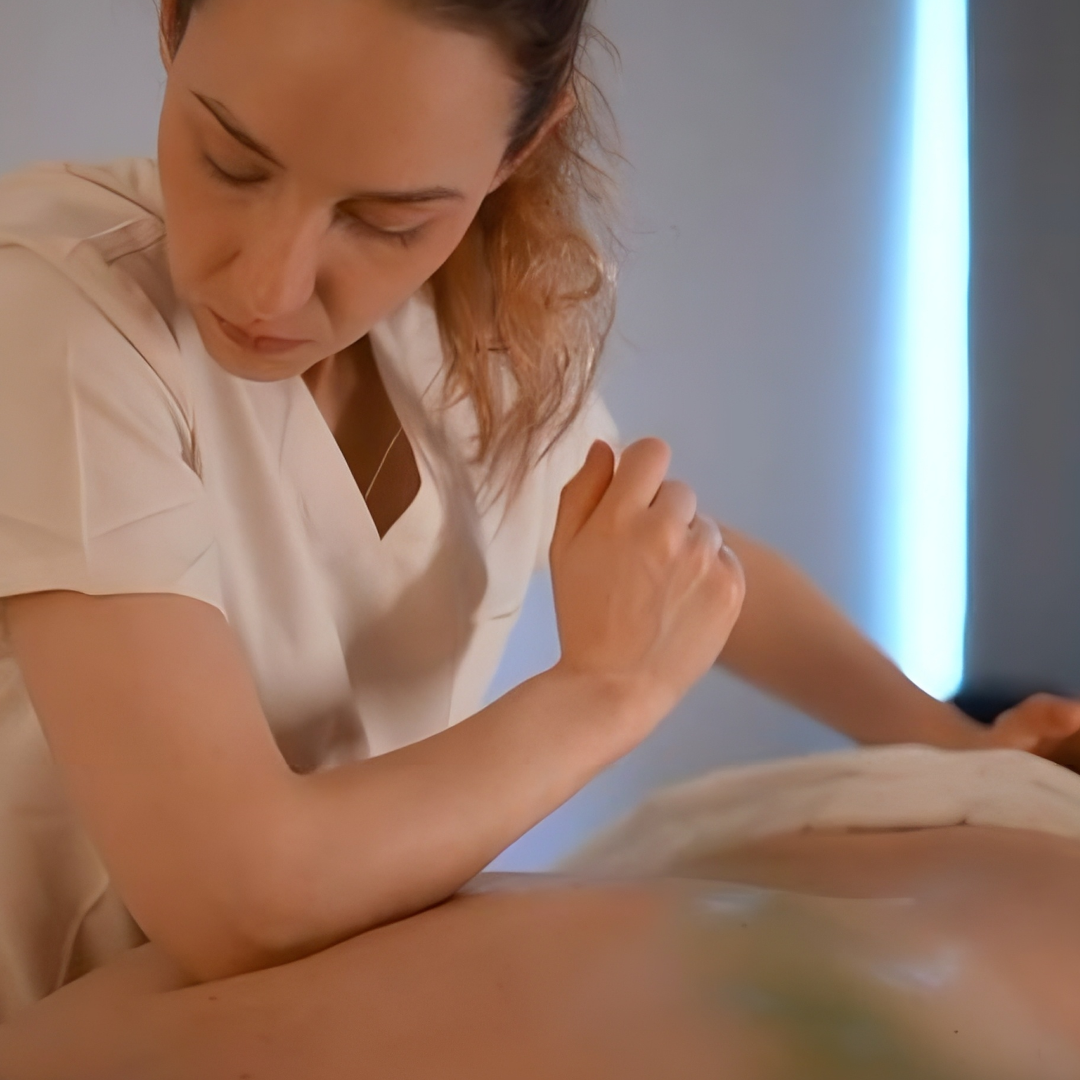
Deep Tissue
Deep tissue massage is a technique that acts on the deepest layers of muscles and connective tissues, and is especially recommended for relieving persistent pain, muscle tension, and contractures. Using firm pressure and slow movements, this approach works on specific areas of tension, helping to restore mobility and muscle function. It is a great option for those who exercise regularly or feel accumulated stiffness in their back, neck, and shoulders.
In addition to the physical benefits, Deep Tissue massage also promotes emotional balance, as it helps to release internal blockages and tensions in the body. Even though it is a more intense massage, it provides a feeling of deep relief and renewal, promoting lasting well-being and a feeling of lightness that extends far beyond the session.
Frequent Asked Questions
What is a deep tissue massage?
A deep tissue massage targets deeper layers of muscle and connective tissue using slow, firm pressure. It’s especially beneficial for chronic muscle tension, stiffness, and areas of tightness caused by stress, overuse, or poor posture.
How is it different from a relaxing massage?
While a relaxing massage uses gentle, flowing strokes to calm the body, a deep tissue massage focuses on specific muscle groups and uses more pressure to release knots and tension. It’s more therapeutic than soothing, although clients often feel very relaxed afterward.
Does a deep tissue massage hurt?
Some discomfort may occur when working on tight or sore areas, but it should never be unbearable. It’s important to communicate openly with your therapist so they can adjust the pressure according to your comfort level.
What can I expect after the massage?
You might feel some muscle soreness for a day or two—similar to post-workout soreness. Staying hydrated, stretching gently, and taking a warm bath can help ease any discomfort. Most clients notice improved mobility and relief from tension soon after.
Who should get a deep tissue massage?
This type of massage is ideal for people with chronic pain, muscle stiffness, or those who engage in intense physical activity. However, it’s not recommended for individuals with certain conditions like acute injuries or inflammation, so it’s best to discuss your health history with the therapist beforehand.