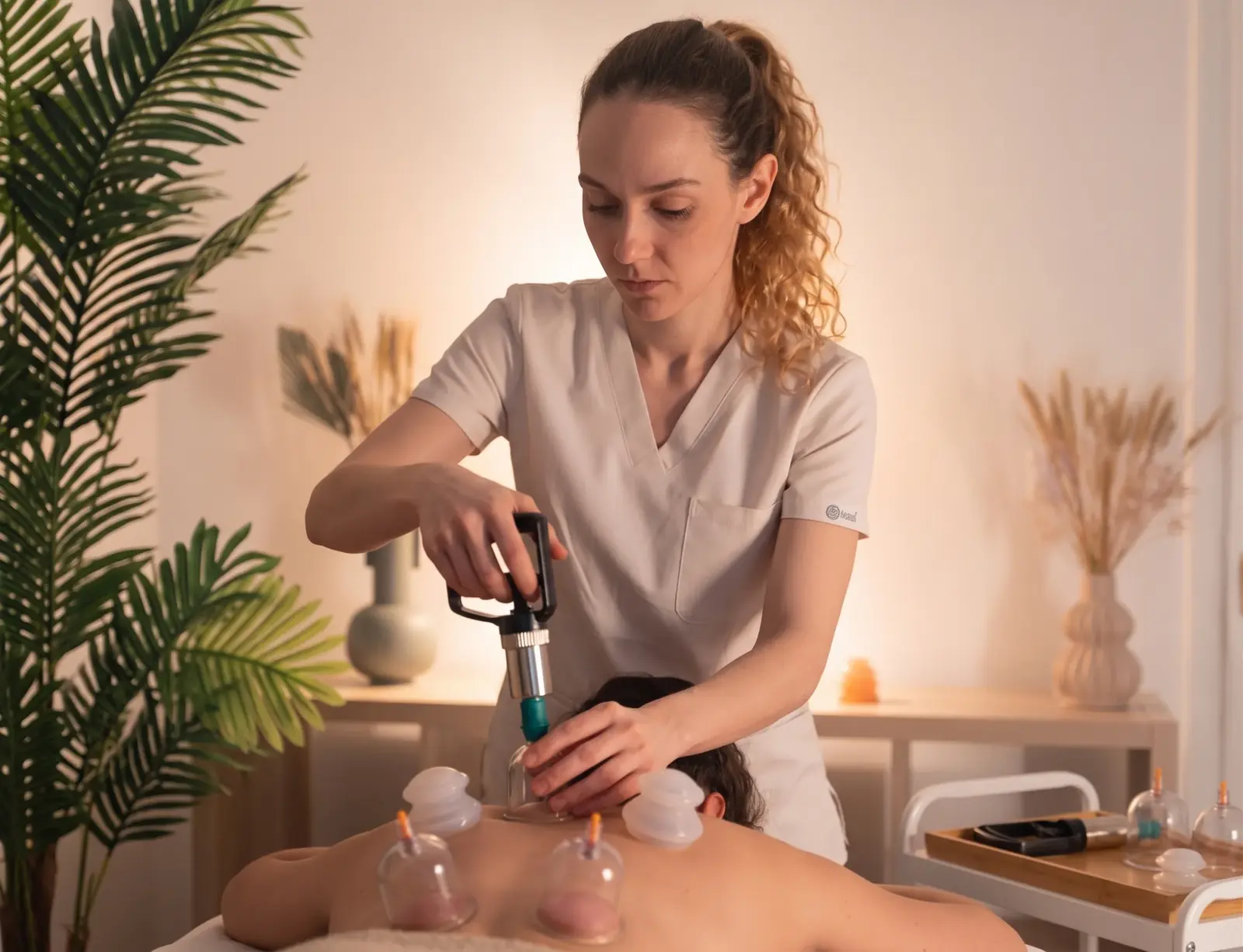
Cupping therapy is a complementary technique that uses cups to create controlled suction on the skin. It is frequently used as a complement to massage and other manual techniques, especially when there is a feeling of tension or muscular discomfort.
At Wellzen by Diana, in Lisbon, cupping therapy can be integrated into a wellness or therapeutic massage session, always after an initial assessment and taking into account the characteristics and needs of each person.
It is important to clarify that cupping therapy is a complementary approach and does not replace diagnosis, medical care, physiotherapy, or other health treatments.
What is cupping therapy?
During a cupping therapy session, the therapist places cups on specific areas of the body, creating a controlled negative pressure that gently lifts the skin and superficial tissues.
Depending on the session's objective, the cups may remain stationary for a few minutes or be moved across the skin, usually using massage oil to facilitate gliding.
The suction temporarily increases superficial blood circulation in the treated area and may cause circular reddish, pinkish, or purplish marks. These marks are a normal reaction to the suction and tend to fade gradually over a few days.
Main types of cupping therapy
There are different ways to apply this technique:
- Dry cupping: uses only the suction of the cups, without cuts or bleeding.
- Sliding cupping: the cups are moved gently over the skin, usually with oil.
- Wet cupping: involves small incisions in the skin to induce bleeding and requires specific hygiene and safety procedures.
In the context of a conventional massage session at Wellzen by Diana, a non-invasive approach is used, prioritising comfort, safety, and adapting the intensity to each person's response.
What are the possible benefits of cupping therapy?
Cupping therapy is sought primarily as a complement to muscular work and relaxation.
Some people report a feeling of:
- Muscular relaxation
- Temporary reduction in the feeling of tension
- Relief from muscular discomfort in specific areas
- Greater sense of lightness and well-being
- Relaxation after the session
- Complement to the manual work carried out during a therapeutic massage
There is some scientific evidence that cupping therapy can help relieve certain types of musculoskeletal pain, including discomfort in the cervical and lumbar regions. However, the research still has limitations and the results do not allow us to state that the technique is effective for all people or conditions.
For this reason, it is more appropriate to view cupping therapy as a complementary wellness technique that supports muscular work, rather than a cure or treatment for a specific condition.
Cupping therapy for muscle tension
One of the reasons many people seek this technique is the feeling of tension or stiffness in areas such as:
- Back
- Shoulders
- Neck
- Lower back
- Legs
When appropriate, cups can be combined with therapeutic massage or relaxing massage techniques, allowing the same area to be worked on through different approaches.
The choice of techniques always depends on the initial assessment, the person's sensitivity, and the session's objective.
How does a cupping therapy session work?
Before beginning the treatment, Diana talks with you about your general health, areas of discomfort, goals, and possible contraindications.
A session may include:
- Initial assessment and identification of areas to work on
- Skin preparation for cup application
- Application of cups, with intensity adjusted to your tolerance
- Cups remaining in place for a controlled period or gentle movement over the skin, depending on the technique chosen
- Removal of the cups
- Application of complementary massage techniques, where appropriate
- Simple recommendations for aftercare
Cupping therapy should not be excessively painful. It is normal to feel pressure or a pulling sensation on the skin, but any intense pain or significant discomfort should be communicated immediately to the therapist.
Are the cupping therapy marks normal?
Yes. One of the most well-known characteristics of cupping therapy is the circular marks that can remain on the skin after application.
These marks can range from a slight redness to a darker colouration, similar to a superficial bruise. The intensity depends on several factors, including:
- Individual skin sensitivity
- Suction intensity
- Application time
- Area of the body
- Individual tendency to bruise
Typically, the marks fade progressively over a few days.
A darker mark does not mean the session was more effective. Stronger suction is not necessarily better. The goal should be to find an intensity appropriate to the person and the area being treated.
Aftercare following cupping therapy
After the session, it is advisable to:
- Avoid intense friction on the treated areas
- Avoid excessive heat immediately after the session
- Keep the skin clean
- Respect the body's natural response
- Inform the therapist if unusual symptoms appear
If intense pain, blisters, discharge, significant swelling, or other worrying signs appear, you should seek medical advice.
Who should not have cupping therapy?
Cupping therapy is not suitable for everyone. Before the session, it is important to inform the therapist about any illnesses, medication, pregnancy, clotting problems, or other relevant changes in your health.
The technique may not be recommended, or may require prior medical assessment, in situations such as:
- Open wounds, infections, burns, or skin irritation
- Active eczema or psoriasis in the area to be treated
- Particularly fragile skin
- Significant tendency to bruise
- Clotting problems
- Use of anticoagulant medications
- Known or suspected thrombosis
- Recent fractures
- Acute inflammation in the area to be treated
- Some cardiovascular conditions
- Pregnancy, depending on the area and technique used
It is also important to distinguish dry cupping from techniques involving intense heat, incisions, or bleeding, which carry additional risks.
Improper application of cups can cause unwanted effects such as more intense bruising, burns, skin changes, scarring, or infections.
If you are pregnant, take regular medication, have a clinical condition, or have doubts about the safety of the technique in your case, we recommend speaking with your doctor and informing the therapist before booking the session.
Cupping therapy and pregnancy
During pregnancy, any body technique must be adapted to the stage of gestation and the individual characteristics of the pregnant person.
Cupping therapy should not be applied automatically during pregnancy. The indication depends on the specific situation, the area of the body, and the technique used.
If you are pregnant and looking for a massage in Lisbon, we recommend informing us about the pregnancy at the time of booking so we can assess which techniques are most appropriate and safe for you.
For many pregnant women, an adapted prenatal massage may be a more appropriate alternative to promote relaxation and comfort during pregnancy.
Cupping therapy at Wellzen by Diana, in Lisbon
At Wellzen by Diana, in Saldanha, Lisbon, cupping therapy is used as a complementary technique, always with a focus on comfort, safety, and the individualisation of the session.
Depending on your needs, the technique can be integrated into a session of:
- Therapeutic massage
- Relaxing massage
- Deep Tissue
- Other manual techniques suited to your objective
The session is not based on a "the stronger, the better" approach. The goal is to adapt the intensity and techniques used to your body's response.
We do not promise miraculous results and do not present cupping therapy as a substitute for medical care. We aim to provide a professional and responsible experience, with a prior assessment and open communication throughout the session.
Frequently asked questions about cupping therapy
Does cupping therapy hurt?
Cupping therapy can cause a feeling of pressure, suction, or pulling on the skin, but should not cause intense pain. The suction intensity should be adjusted to each person's comfort and response.
If you feel significant pain during the session, you should immediately inform the therapist so that the intensity can be reduced or the technique stopped.
How long do cupping therapy marks last?
The marks can remain for a few days, depending on the suction intensity, the area treated, and individual skin sensitivity.
Their duration can vary from person to person. A more intense or darker mark does not necessarily mean the treatment was more effective.
Does cupping therapy always leave marks?
Not necessarily. The intensity of the marks depends on the pressure used, the application time, and the individual skin response.
A gentler application may leave only slight redness, while more intense suction can produce more visible marks.
Does cupping therapy help with weight loss?
Cupping therapy should not be considered a treatment for weight loss or fat reduction.
Although some people may temporarily feel a sense of lightness or change in skin appearance after certain treatments, this does not mean a loss of body fat.
Does cupping therapy help with muscle pain?
Scientific research suggests that cupping therapy may provide some short-term relief for certain types of musculoskeletal pain, but the evidence still has limitations.
At Wellzen by Diana, when appropriate, it can be used as a complement to a therapeutic massage and other manual techniques.
Can I have cupping therapy if I take anticoagulants?
Anticoagulant medications can increase the risk of bruising and other complications. It is therefore important to inform the therapist before the session.
Depending on the situation, it may be necessary to avoid the technique or seek prior medical advice.
How often can I have cupping therapy?
There is no universally appropriate frequency for all people. The frequency should depend on the objective, the body's response, the application intensity, and any health conditions.
The therapist can recommend an appropriate frequency after assessing your situation.
Does cupping therapy replace physiotherapy or medical treatment?
No. Cupping therapy is a complementary technique and does not replace medical diagnosis, physiotherapy, medication, or other treatments recommended by healthcare professionals.
If you have persistent, intense, or unexplained pain, it is important to seek assessment by a healthcare professional.
Thinking of trying cupping therapy in Lisbon?
If you are looking for cupping therapy in Lisbon as a complement for relaxation or to work on the feeling of muscle tension, we can assess whether this technique is appropriate for you.
Book your session at Wellzen by Diana, in Saldanha, Lisbon, and talk to us about your objective before treatment.
Note: This article is for informational purposes only and does not constitute medical advice, diagnosis, or treatment. Cupping therapy does not replace medical care, physiotherapy, or other health treatments. Results and response to treatment may vary from person to person.