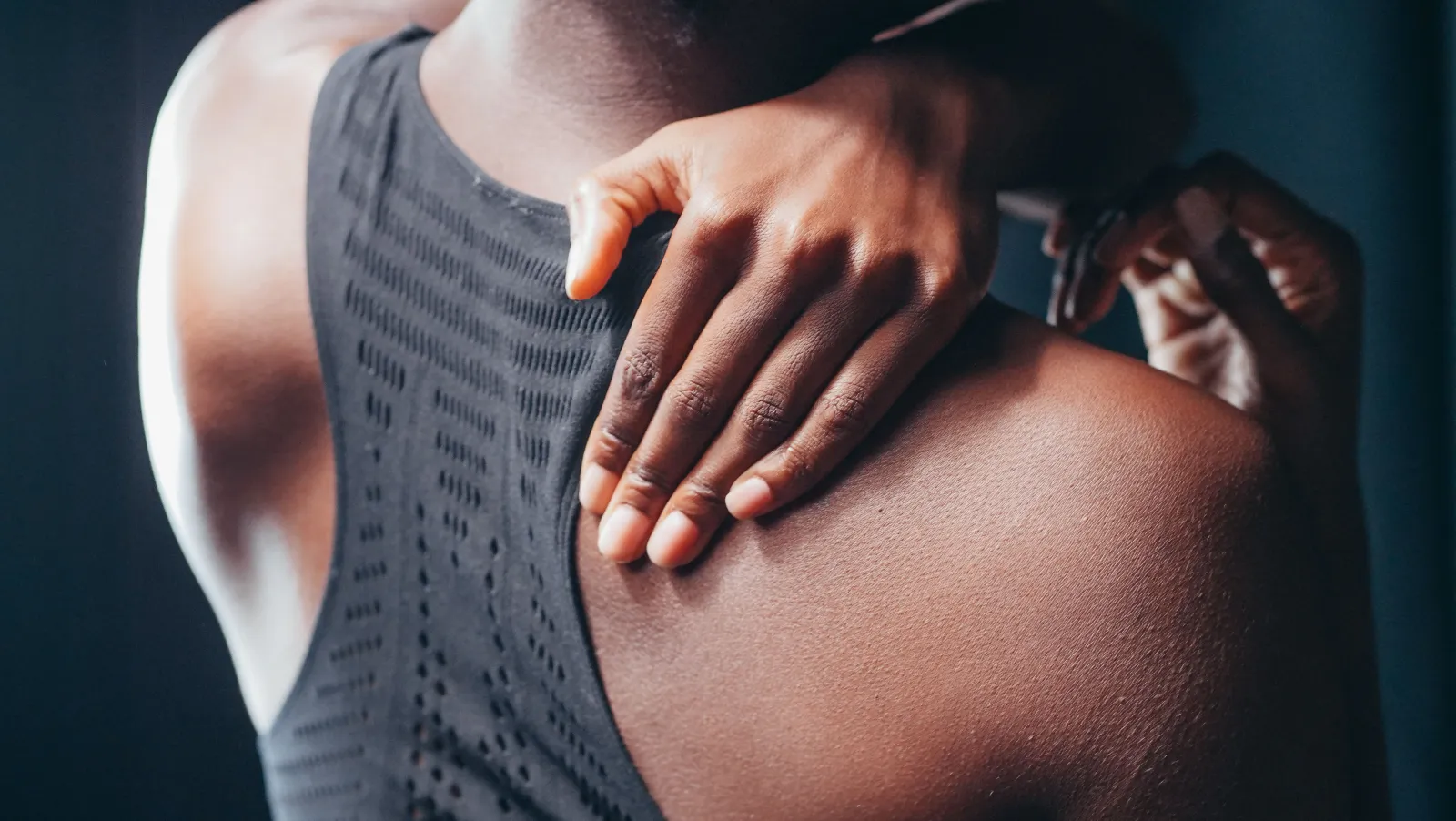
Frozen shoulder (adhesive capsulitis) is one of the most frustrating conditions: the shoulder locks up, every movement hurts, and recovery is slow. But it is predictable, it has well-defined phases, and massage combined with stretching can support rehabilitation.
What is frozen shoulder?
The shoulder joint is surrounded by a capsule of connective tissue. In frozen shoulder this capsule becomes inflamed and shrinks, drastically reducing range of motion. It is as if the shoulder were "tied down".
It is different from:
- Tendinitis: inflammation of the tendon (it hurts but still moves)
- Impingement: a pinched structure (limited movement but less pain at rest)
- Rotator cuff injury: a torn tendon (weakness) or a rupture (acute pain)
The 3 phases of frozen shoulder
Phase 1: Freezing (2-3 months)
- Progressive pain
- Movement increasingly limited
- Worse at night (pain that wakes you up)
- Active inflammation in the tissues
What to do: relative rest, ice, anti-inflammatories, light massage.
Phase 2: Frozen (3-12 months)
- Less acute pain but a locked shoulder
- Greatly reduced range of motion (flexion, abduction and rotation are limited)
- You can do basic activities but with restrictions
- Inflammation decreases but stiffness increases
What to do: progressive stretching, deep massage, mobilisation with a physiotherapist.
Phase 3: Thawing (6-12 months)
- Range of motion gradually improves
- Pain disappears
- Strength slowly recovers
- Risk of going backwards if you stop rehabilitation
What to do: active exercise, strengthening, maintenance massage.
Total: recovery usually takes one to two years, and can be longer.
Why does frozen shoulder happen?
Known causes:
- Prolonged immobilisation: after surgery, an injury or a fracture
- Diabetes: people with diabetes have 3-4 times the risk
- Inactivity: spending time without using the shoulder (older age, depression)
- Trauma: a previous injury that causes prolonged inflammation
Undetermined causes (idiopathic):
- Many cases appear with no apparent cause
- Associated with stress, lack of movement, chronic poor posture
How massage can support rehabilitation
Phase 1 (Freezing): light massage
- Reduces inflammation with gentle techniques
- Improves circulation in the joint
- Helps you sleep better (reduces night pain)
- Doesn't force movement (contraindicated in the acute phase)
Phase 2 (Frozen): deep massage + mobilisation
- Works the shrunken capsule with firm pressure
- Releases adhesions (bonds between layers of tissue)
- Reactivates blood circulation
- Prepares the tissue for progressive stretching
- Supports strength recovery
Phase 3 (Thawing): rehabilitation massage
- Keeps releasing residual restrictions
- Eases functional reintegration (return to sport and work)
- Supports keeping mobility (the other shoulder can also be affected later)
Rehabilitation protocol with massage
Weeks 1-4 (acute phase)
- Frequency: 1-2 times a week
- Type: gentle, relaxing massage
- Techniques: light pressure, guided breathing
- Complement: ice 15 min, 3-4 times a day; anti-inflammatories if recommended
- Stretching: pendulum only (arm hanging, making small circles)
Weeks 5-12 (frozen phase)
- Frequency: 2 times a week
- Type: Deep Tissue massage + mobilisation
- Techniques: moderate to deep pressure, myofascial release, passive stretching
- Complement: physiotherapy 1-2 times a week; exercises at home
- Stretching: progressive (lying down, wall, active-assisted stretching)
Weeks 13-26+ (thawing phase)
- Frequency: once a week or fortnightly
- Type: deep massage + strengthening
- Techniques: work in all directions of movement, strength exercise
- Complement: exercise at home 3-5 times a week
- Stretching: active (without assistance), resisted
Specific stretches for each phase
Phase 1: Pendulum
Standing, lean forward and let the arm hang. Make small circles for 30 seconds. It should not trigger pain.
Phase 2: Lying stretch
Lying down, the affected arm crossed over the chest, the other hand pulling gently. Hold for 30-45 seconds. Repeat 3 times. Ideal for loosening the posterior capsule.
Phase 2-3: Wall stretch
Stand side-on to a wall and raise the arm slowly to maximum range. Hold. Come down 5 cm at a time. Go back up. A set of 10.
Phase 3: Diagonal stretch
Cross your arms, pull the elbow up and towards the opposite side. Hold for 45 seconds. Complete rehabilitation.
What to expect in a frozen shoulder session
- Assessment: the therapist tests range of motion in each direction (flexion, abduction, internal/external rotation)
- Conversation: when did it start? Have you had physiotherapy? What makes it worse? Are you diabetic?
- Phase-specific massage: technique adjusted to the phase (light in the acute phase, deep in the frozen phase)
- Active mobilisation: guiding the arm through movements to restore range of motion
- Stretching: passive stretches followed by active stretches to strengthen
- Plan for home: daily stretches specific to your phase
Duration: 55 to 90 minutes
Signs that you are improving
- You can lift your arm higher each week
- Night pain disappears (a sign of less inflammation)
- You can sleep on the side of the affected shoulder
- You can put your hand behind your back
- Strength returns (you can carry weight)
Conclusion
Frozen shoulder is frustrating but recoverable. The key is to start early with massage suited to the phase. Recovery is usually slow and varies from person to person. It works best with medical and physiotherapy follow-up, with massage as a complement.
If you have a frozen shoulder or suspect you are developing one, book your rehabilitation session with Diana in Lisbon. She can assess your specific phase and create a massage plan adapted to your recovery.