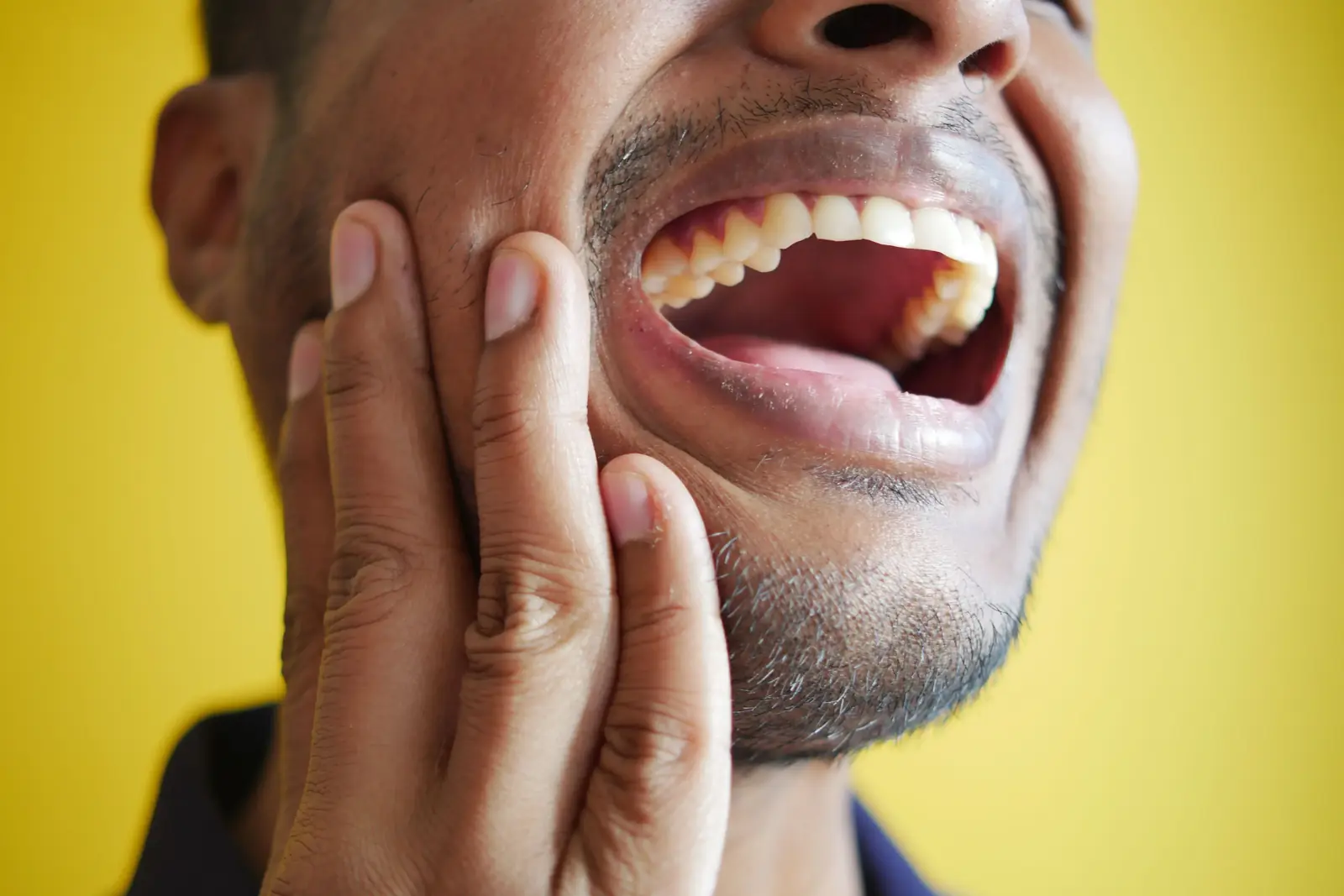
Many people treat a headache as a problem that lives only in the head — but in some cases the source is lower down: the jaw. The temporomandibular joint (TMJ) connects the jaw to the skull just in front of the ear, and when it is overloaded it can produce pain that radiates to the temples, forehead, neck and even behind the eyes.
In this article we explain how to tell a common headache apart from jaw-related pain — and which signs deserve attention.
What is the TMJ?
The TMJ is the "hinge" that lets you open your mouth, chew, speak and yawn. When the chewing muscles become tense — for example, from clenching the teeth, grinding during sleep, chewing too much gum, or holding a stressed posture — pain can spread to other parts of the head and neck.
This is called referred pain: you feel it in the head, but the starting point may be the jaw or the muscles that move it.
Jaw pain or headache?
| Sign | Jaw / TMJ-related pain | Headache of another origin |
|---|---|---|
| Location | Temples, face, ear, neck, sometimes behind the eyes | Can be generalised, one-sided, forehead, back of the head or behind the eyes |
| Worsens with | Chewing, talking at length, yawning, opening the mouth wide or clenching the teeth | Does not always change with jaw movements |
| Associated symptoms | Clicking, sense of locking, pain when chewing, facial tension, teeth clenching | Nausea, sensitivity to light, visual changes, nasal congestion, etc., depending on cause |
| Common factors | Bruxism, stress, muscular tension, poor cervical posture | Migraine, tension headache, eye strain, sinusitis, sleep, hormones, dehydration |
Pain linked to TMJ dysfunction typically worsens with chewing, prolonged talking, yawning or clenching, and may be accompanied by clicking, stiffness or difficulty opening the mouth fully.
Signs that the jaw may be involved
Consider the possibility of jaw involvement if, alongside the headache, you notice:
- Pain or tenderness when chewing, talking or yawning.
- Clicking, grating or a sensation of the jaw "locking".
- Clenching or grinding the teeth, especially at night.
- Tension in the muscles of the temples, cheeks, neck or shoulders.
- A headache that improves when you rest the jaw or reduce clenching.
Jaw and neck tension are often linked: people with jaw discomfort frequently report cervical stiffness, muscle tension and recurring headaches.
When a headache is not "just" tension
Headaches have many possible causes — migraine, tension headache, cervical tension, eye strain, sinusitis, insufficient sleep or overuse of painkillers. The jaw is therefore only one of the possibilities to evaluate, even if it is a frequently overlooked one.
Seek urgent medical assessment if the headache comes on suddenly and very intensely, is accompanied by fever, confusion, weakness, speech or vision changes, seizures, or follows a head injury.
How to relieve jaw tension
A few simple steps can reduce the load on the TMJ and the chewing muscles:
- Avoid chewing gum, hard objects or very tough foods during episodes of pain.
- Take breaks from prolonged talking and avoid yawning with your mouth wide open.
- Notice whether you are clenching your teeth during the day; try to keep lips together, teeth apart and jaw relaxed.
- Apply gentle heat to the temple, cheek or neck area, if comfortable.
- Work on breathing, sleep and stress management, as jaw clenching tends to increase during tense periods.
- If you suspect nocturnal bruxism, speak to a dentist about the possibility of a night guard.
How massage can help
Therapeutic massage can be an important support when headaches are associated with muscular tension in the jaw, neck, shoulders and cervical area. Focused work on the chewing muscles, temples, neck and upper back can help reduce tension, improve body awareness and promote relaxation.
At WellZen by Diana, each session is adapted to your history and the areas under the most strain. If you experience frequent headaches accompanied by jaw clenching, clicking when you chew or neck tension, it is worth exploring this connection too.
Frequently asked questions
How do I know if my headache is coming from my jaw?
If the pain worsens when chewing, yawning or talking for long periods, and if you notice jaw clicking, teeth clenching or tension in the face and neck, the TMJ may be involved. A dentist or doctor can help confirm.
What is bruxism and how does it relate to headaches?
Bruxism is the habit of grinding or clenching the teeth, often during sleep without noticing. The resulting muscle overload can radiate pain to the temples and neck, causing morning headaches.
Can massage help with TMJ pain?
Therapeutic massage on the chewing muscles, temples, neck and shoulders can help reduce the muscular tension associated with TMJ dysfunction. It does not replace medical or dental assessment, but can be a useful complement for well-being.
When should I see a doctor for a headache?
Seek urgent assessment if the headache comes on suddenly and very intensely ("the worst headache of my life"), is accompanied by fever, confusion, weakness, vision or speech changes, or follows a head injury.
If you experience frequent headaches with jaw or neck tension, book a therapeutic massage session with Diana in Lisbon. Each session is adapted to your areas of greatest strain.
Note: This article is for informational purposes only and does not constitute medical, dental or physiotherapy advice. If the pain is intense, persistent or recurrent, please seek advice from a healthcare professional.