Lower back pain is one of the most common musculoskeletal complaints and can occur after many hours sitting, physical exertion, repetitive movements, or even without an obvious cause.
When there is associated muscle tension, massage can provide relief, relaxation, and greater comfort during movement, but not all lower back pain should be treated the same way.
In this guide, we explain when massage may make sense, which techniques can be used at Wellzen by Diana, and when it's important to first seek medical or physiotherapy evaluation.
What is lower back pain?
Lower back pain is discomfort localized to the lower back region. It can vary greatly in intensity, duration, and origin.
In many cases, it is not possible to identify a single structure responsible for the pain. For this reason, lower back pain is often described as non-specific.
The duration of symptoms is also important:
Acute lower back pain: less than 6 weeks
It occurs recently and may be related to physical exertion, unusual movements, overload, or other factors. Many cases of acute lower back pain improve over several weeks.
Whenever possible, maintaining gentle movements and usual activities within what is comfortable can be part of recovery.
Subacute lower back pain: 6 to 12 weeks
When discomfort persists for several weeks, changes may occur in how the person moves and distributes load through the body.
Muscle tension can be part of this picture, but persistent pain does not always have an exclusively muscular cause.
Chronic lower back pain: more than 12 weeks
Chronic lower back pain can be continuous or appear recurrently.
It may be related to a combination of physical, behavioral, and psychosocial factors, such as physical activity level, sleep, stress, previous pain experiences, and daily demands.
For this reason, there is not necessarily a single cause that explains all cases.
What can contribute to lower back pain?
Rather than having a single cause, different factors can contribute to the onset or persistence of lower back pain.
1. Sedentary lifestyle and prolonged periods in the same position
Sitting for many hours or remaining in the same position for extended periods can contribute to stiffness and discomfort.
The problem is not necessarily finding a single "wrong" posture, but rather the lack of movement variety throughout the day.
Do you often have back pain? Stand up from your chair or change position. Orthopedist Ricardo Pinto says the best posture you can assume is "the next one."
Standing, walking, and changing position regularly can help keep your body active.
2. Lack of physical activity
Lack of movement and muscle strength can reduce the body's ability to cope with daily demands.
Regular physical activity and strengthening exercises can be part of lower back pain prevention and management.
3. Overload or repetitive movements
Lifting loads, practicing certain sports, or repeating certain movements can increase load on the lower back region, especially when the body is not accustomed to these demands.
Gradual progression of activity and good physical preparation can help improve tolerance to exertion.
4. Stress and sleep quality
Stress, insufficient sleep, and other psychosocial factors can influence how we feel and cope with pain.
When we are under stress, we may feel greater muscle tension and become more sensitive to discomfort.
For this reason, relaxation and sleep quality can also be part of a holistic approach to lower back pain.
5. Previous episodes of lower back pain
People who have had episodes of lower back pain may experience it again in the future.
Learning to recognize the factors that contribute to discomfort, staying active, and developing strength and mobility can help reduce the impact of these episodes.
Lower back pain does not necessarily mean injury
Feeling pain does not automatically mean there is a serious injury or that the spine is "misaligned."
In many cases of lower back pain, it is not possible to identify a single structure responsible for the symptoms.
For this reason, expressions like "spine out of place," "blocked vertebra," or "a muscle is pulling on the spine" should be used cautiously.
Pain is a complex experience that can be influenced by physical, emotional, behavioral factors, and the context in which it occurs.
Can massage help with lower back pain?
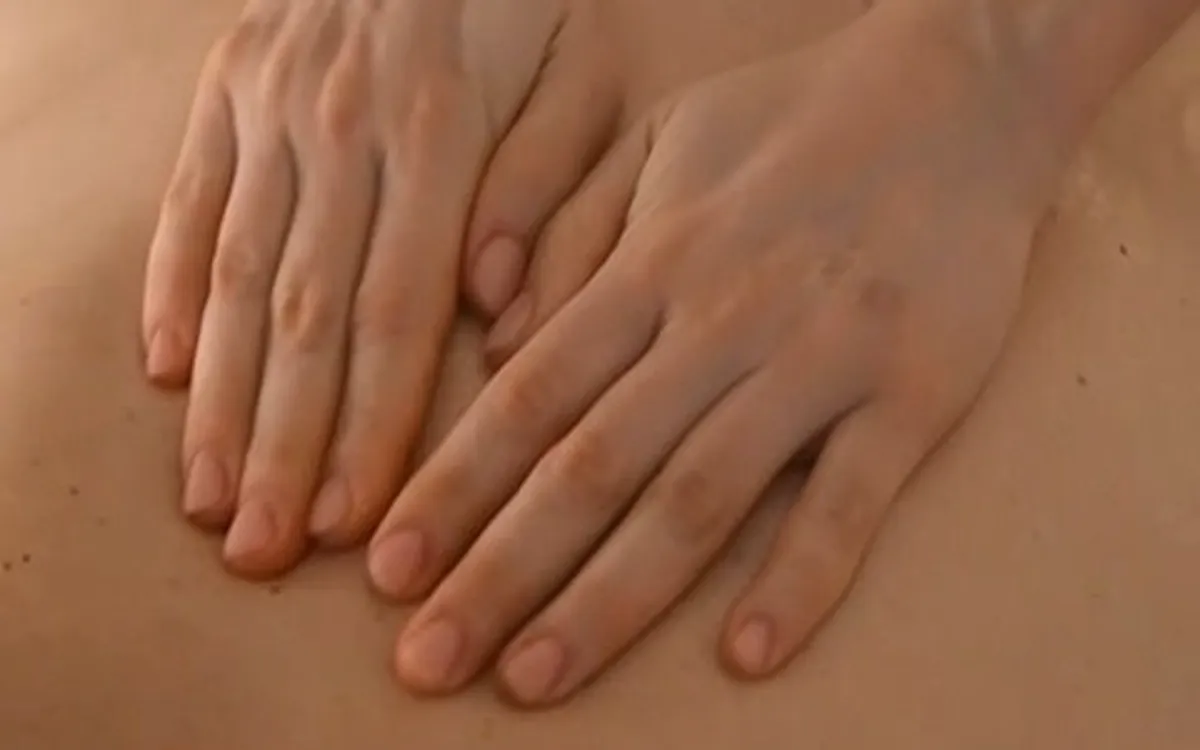
Massage can be a complementary tool for some people with lower back pain, especially when there is muscle tension, stiffness, or discomfort associated with stress and overload.
The goal of a session is not to "correct" the spine or treat a structural injury. The goal is to work the soft tissues, promote relaxation, and provide greater comfort.
Available research suggests that massage can help reduce pain intensity in some people, particularly in the short term. However, results vary, and massage should be viewed as part of a broader approach, which may include movement, exercise, sleep, stress management, and, when necessary, professional health support.
How can massage help?
Reduction of muscle tension
When there is muscle tension or overload in the lower back region and nearby areas, massage techniques can help promote relaxation and a sense of less stiffness.
Greater comfort and mobility sensation
After a session, some people feel greater ease in moving or a sense of less stiffness.
The response is individual and does not mean that the massage has "repositioned" or "corrected" the spine.
Relaxation
Massage can provide a period of rest and relaxation, which can be particularly useful when discomfort is associated with stress or accumulated tension.
Complement to other strategies
Massage can work better when integrated into a routine that also includes movement, physical activity, adequate rest, and other self-care strategies.
When there is a specific condition or persistent pain, massage should not replace recommended medical or physiotherapy support.
What type of massage may be appropriate for lower back pain?
There is no single technique that is best for everyone. The choice depends on symptoms, tension level, individual sensitivity, and the goal of the session.
Therapeutic Massage
Therapeutic Massage allows for a personalized approach, adapted to areas where there is greater tension or discomfort.
The intensity and techniques used can be adjusted during the session according to your body's response.
At Wellzen by Diana, this is one of the most appropriate options for those seeking a personalized approach to muscle tension and discomfort.
Deep Tissue
Deep Tissue Massage uses firmer pressure and can be an option when there is significant muscle tension and the person tolerates higher intensity well.
More pressure, however, does not necessarily mean better results.
The intensity should always be adapted to the individual and their comfort level.
Relaxing Massage
When muscle tension is associated with stress, fatigue, or the need for relaxation, a Relaxing Massage can be an option.
The goal is to provide a general relaxation experience and help reduce the sensation of accumulated tension.
Ayurveda
An Ayurveda Massage can be considered when the main goal is deep relaxation and well-being, especially when there is a strong component of stress and fatigue.
It should not be presented as a specific treatment for a spine condition or injury.
When you should not get a massage without professional evaluation
While many situations of lower back pain can be managed conservatively, there are symptoms that warrant medical evaluation before massage.
Seek professional evaluation if you have:
Loss of bladder or bowel control;
Numbness in the area between the legs or in the perineum;
Progressive weakness in one or both legs;
Numbness or tingling accompanied by weakness;
Fever or significant malaise along with lower back pain;
Severe pain after a fall or other significant trauma;
Pain that is rapidly worsening or new and concerning symptoms.
If pain is radiating to your leg and is accompanied by tingling, numbness, or weakness, it is important to seek appropriate evaluation before choosing a massage.
A massage does not replace medical or physiotherapy evaluation.
How often should you get a massage?
There is no universal frequency appropriate for everyone.
The need can depend on symptom intensity, routine, physical activity, response to sessions, and individual goals.
For some people, a single session may provide the relaxation and relief they seek. Others may prefer regular sessions as part of their wellness routine.
When there is persistent or recurring pain, massage can complement other strategies, but should not replace medical or physiotherapy evaluation or treatment when these are necessary.
What to do between sessions?
Massage can be just one part of a strategy for taking care of your back.
Stay active
Walking and maintaining usual activities within what is comfortable can help avoid prolonged periods of inactivity.
Vary your position
If you spend many hours sitting, try to stand up and change position regularly.
There is no need to find a single "perfect posture." What matters most is avoiding staying in the same position for too long.
Strengthen your body
Strengthening exercises, including exercises for your legs, glutes, and core, can help develop your body's capacity to handle daily activities.
Gentle mobility
Gentle movements can help maintain a sense of mobility.
Some people may benefit from simple exercises such as:
- Spine mobilization in quadruped position (cat-cow);
- Glute bridge;
- Dead bug;
- Gentle hip flexor stretches;
- Walking.
Exercise should be adapted to the individual. If a movement significantly increases pain, it should be stopped.
In case of persistent, intense pain or pain accompanied by neurological symptoms, seek professional evaluation.
What to expect from a lower back massage at Wellzen?
At Wellzen by Diana, each session is adapted to the needs and comfort level of each individual.
1. Initial conversation
Before the session, we talk about where you feel discomfort, how long it has been present, and what seems to aggravate or relieve it.
2. Defining the approach
Based on the information shared, the most appropriate approach for the session is chosen and pressure intensity is adjusted.
3. Personalized work
Depending on your needs, the session may include the lower back region, glutes, and other muscle areas associated with the sensation of tension.
4. Adjustment during the session
Pressure and techniques are adjusted according to your comfort and response during the massage.
5. Simple recommendations
When appropriate, simple movements or habits may be suggested to complement your well-being between sessions.
The session does not aim to diagnose a medical condition or replace professional health support.
Frequently asked questions about massage for lower back pain
Is massage good for lower back pain?
Massage can help some people temporarily reduce pain and muscle tension, especially when integrated into a broader approach that includes movement and self-care.
The response varies from person to person and depends on the cause and characteristics of the discomfort.
Can I get a massage if I have lower back pain?
It depends on your symptoms.
If you only feel muscle tension or discomfort without warning signs, a massage may be an option.
If there is numbness, weakness, changes in bladder or bowel control, fever, or pain after significant trauma, you should seek medical evaluation.
Is Deep Tissue better for lower back pain?
Not necessarily.
More pressure does not automatically mean better results. The technique and intensity should be adapted to the individual and the situation.
In some cases, moderate pressure or a personalized therapeutic approach may be more appropriate.
How many sessions are needed?
There is no fixed number of sessions.
Some people seek a single session, while others prefer regular sessions as part of their wellness routine.
If there is persistent or recurring pain, it is important to consider other strategies and, when necessary, professional health support.
Can massage treat a herniated or bulging disc?
Massage should not be presented as a treatment for a herniated or bulging disc.
It can, in some cases, be used as a complement to address muscle tension and promote comfort, but a specific spine condition should be monitored by the appropriate health professional.
Can I get a massage if the pain radiates down my leg?
Pain that extends into the leg can have different causes.
When accompanied by tingling, numbness, or weakness, it is particularly important to seek professional evaluation before choosing a massage.
When should I see a doctor instead of getting a massage?
You should seek medical evaluation if you have symptoms such as progressive weakness, changes in bladder or bowel control, numbness in the perineal area, fever, significant trauma, or other concerning symptoms.
Massage for lower back pain in Lisbon
If you're looking for therapeutic massage to relieve tension and discomfort in the lower back area, you can book a session with Diana at Wellzen by Diana, in Saldanha, Lisbon.
The session is personalized according to your needs, your comfort level, and the goal of the massage.
Book a Therapeutic Massage in Lisbon →
Important note
This article is for informational purposes and does not replace medical advice, diagnosis, or treatment.
If you have persistent, intense pain or pain accompanied by neurological symptoms, consult a health professional for appropriate evaluation.