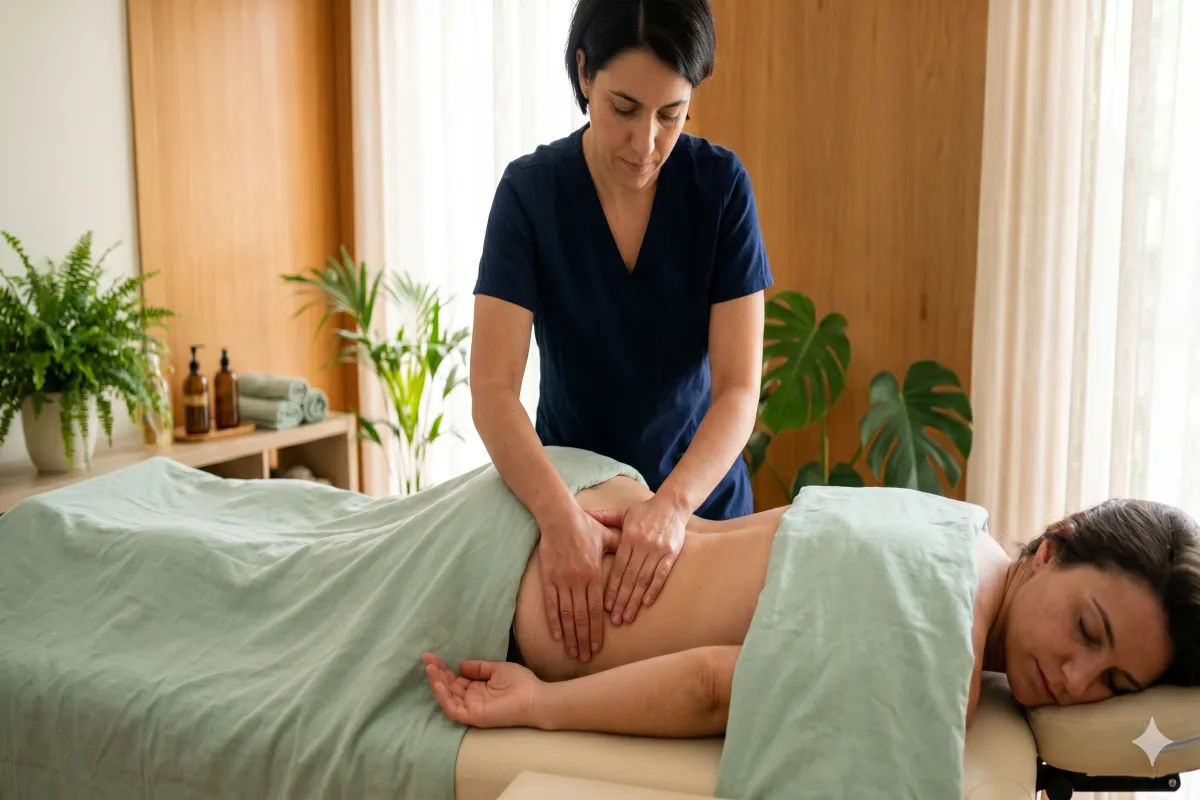
Muscle pain in the back, neck, or legs is one of the most common reasons people seek a massage. But not every massage serves the same purpose—the right technique depends on the cause of the pain, its duration, and intensity. This article explains when it makes sense to book a session and how to choose the most appropriate type of massage.
What type of muscle pain do you have?
Before choosing a technique, it's worth understanding the origin of the pain:
- Daily tension — poor posture, many hours sitting, accumulated stress in shoulders and neck.
- Post-training pain — muscle fatigue, normal micro-injuries from exercise, DOMS (Delayed Onset Muscle Soreness).
- Chronic or recurring pain — tension that always returns to the same area, often lower back or cervical.
- Muscle knots (trigger points) — localized and sensitive points that can radiate pain to other areas.
Each of these situations responds better to a different approach, and that's why an initial conversation with the massage therapist before the session makes such a difference in results.
Main types of massage for muscle pain
Deep Tissue Massage
Works the deeper muscle layers with firm and sustained pressure. Most indicated for chronic tension, persistent knots, and areas that "never relax" even after other gentler massages.
Sports Massage
Designed for those who train regularly. Helps with post-effort muscle recovery, reduces injury risk, and can improve range of motion before or after competition.
Therapeutic Massage
A more balanced approach, useful for tension related to posture and routine—ideal for those who spend many hours at a computer or feel tension accumulating throughout the week.
How many sessions are needed?
For isolated tension, a single session already brings noticeable relief. For chronic or recurring pain, it's most common to notice progressive improvement over two to three sessions, spaced one to two weeks apart. The body responds better when tension is treated consistently, not just when pain is at its limit.
Signs that you should book a massage instead of waiting
- The pain has lasted more than a few days without improving.
- You feel the same tension point returning to the same area.
- The pain starts to limit simple daily movements.
- You train regularly and feel your recovery is slower than it should be.
If the pain is sudden, very intense, or accompanied by other symptoms (persistent tingling, loss of strength, fever), it's best to seek medical evaluation before scheduling a massage.
How to prepare for the session
You don't need to do anything special, but it helps to:
- Arrive with some time to spare so you don't enter the session rushed.
- Pre-identify where you feel the most tension, to tell the massage therapist right away.
- Drink water before and after the session.
- Avoid very intense training in the hours immediately before.
Conclusion
A massage for muscle pain is only effective when the technique matches the real origin of the pain. Understanding whether tension comes from poor posture, training, or accumulated stress helps you choose the right approach—and feel relief faster.
If you want to treat specific pain, book your session with Diana and tell her where you feel the most tension before arriving.