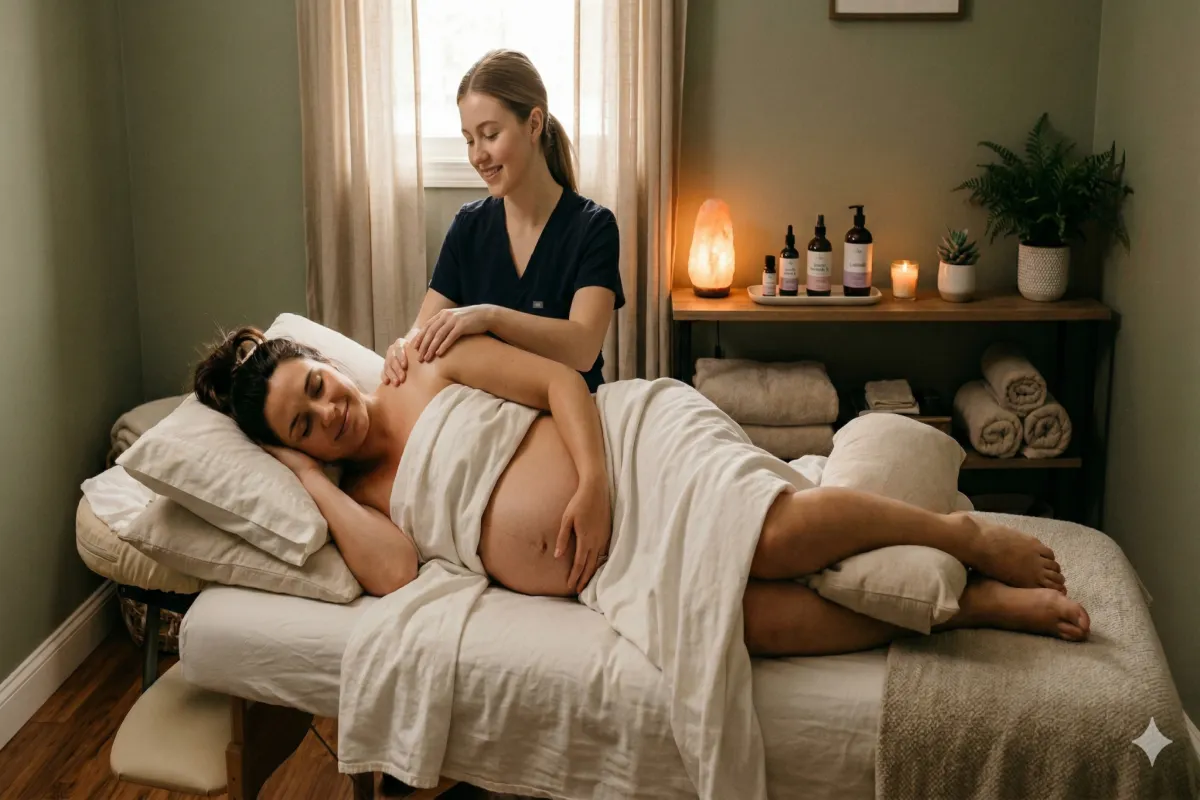
Pregnancy is one of the most transformative experiences in a woman's life, and also one of the periods when the body most urgently asks for care and attention. Prenatal massage is one of the most effective and safe ways to respond to that need.
At WellZen, in Saldanha, Lisbon, each session is conducted by Diana with a holistic approach—integrating Swedish massage techniques, therapeutic touch, and principles of Ayurvedic well-being—to create a deeply relaxing and safe experience.
What is prenatal massage
Prenatal massage (also called prenatal massage or massage for pregnant women) is a manual therapy specially adapted to the physiological and emotional needs of women during pregnancy. It differs from conventional massage in three fundamental aspects: the techniques used, the client's position, and attention to areas to avoid.
Unlike conventional massage, this type of massage takes into account postural changes, weight gain, fluid retention, and sensitivity typical of pregnancy.
Benefits of prenatal massage
Prenatal massage can bring several benefits throughout pregnancy, whenever it is appropriate to the pregnant person's clinical condition and performed by an experienced professional.
- Helps reduce tension in the back, shoulders, and legs.
- Can relieve the feeling of heavy legs and swelling.
- Contributes to a better sense of relaxation.
- Can improve body comfort and mobility.
- Helps reduce stress and promote emotional well-being.
Each pregnancy is different, so the experience should always be personalized and adapted to each person's moment.
When to get prenatal massage
Prenatal massage can be especially useful at different stages of pregnancy, especially when muscular discomfort, body tension, or need for rest begins to appear.
Before booking, it is important to confirm that there are no medical restrictions or specific recommendations from your doctor. In case of high-risk pregnancy, unusual symptoms, or doubts, medical opinion should always come first.
How a session unfolds
In a prenatal massage session, the focus is on comfort and safety. The position, pressure applied, and areas worked are adjusted to respect the pregnant body and avoid discomfort.
Typically, the session takes place in a calm environment, with gentle pace and attention to relaxation. The goal is not just to relieve the body, but also to create a tranquil pause during a phase that can be physically demanding.
What to expect from the experience
A good prenatal massage should convey safety, care, and tranquility. The pregnant person should feel that the session was prepared for their specific moment and that every detail was designed to provide well-being.
- Safety consultation: The therapist asks about weeks of pregnancy, any complications, specific pain, medications
- Positioning: Placed on the side (left ideal) with support pillows for back, belly, legs
- Modified technique: Lighter pressure than regular massage, techniques avoid deep abdomen work
- Personalised focus:
- Second trimester: Back, shoulders, legs, some abdominal massage
- Third trimester: Legs, drainage, perineal massage, pelvic mobilisation
- Constant communication: Therapist asks "are you comfortable?", "too deep?", "ok with this area?"
- Duration: 45–75 minutes (shorter than regular massage — the body tires more easily)
At WellZen, the service is focused on the person's comfort, with a welcoming and professional approach. The focus is on creating a serene, comfortable experience adapted to the real needs of those who are pregnant.
When to start after birth
Immediately after vaginal birth:
- Days 1–3: Gentle touch only, no deep massage
- Days 3–14: Light massage on back/shoulders/legs (avoid abdomen)
- After week 2: Specific postnatal massage can begin
After caesarean section:
- First 2 weeks: No massage (see post-surgical session)
- Weeks 2–6: Lymphatic drainage, light back massage
- After week 6: Progressive postnatal massage
Complementary exercises during pregnancy
Pelvic stretch (all trimesters)
Low lunge on each leg, 45 seconds. Opens the pelvis, reduces pressure.
Glute stretch (figure-4, lying down)
On your side, cross the upper leg and pull the knee towards you — stretches the glute that often causes sciatica during pregnancy.
Spinal mobilisation (modified cat-cow)
On all fours, alternate between arching and rounding the back. 10 repetitions, very slowly.
Daily walk
20–30 minutes at a comfortable pace. Maintains circulation, prepares muscles for labour.
Frequently asked questions
Is prenatal massage safe?
It can be safe when performed by a trained professional and when there are no medical contraindications. In case of doubt, it should be confirmed with your doctor or obstetrician.
In which phase of pregnancy can I get it?
It depends on the progression of pregnancy and individual evaluation. Many pregnant women use massage throughout the second and third trimesters, but each case should be analyzed on a personalized basis.
Does prenatal massage replace medical care?
No. Massage is a wellness and comfort practice; it does not replace medical support or health care during pregnancy.
Can it help with pain and fatigue?
It can help relieve tension and provide a feeling of greater lightness, but results vary from person to person.
Care for this phase
Pregnancy deserves attention, rest, and moments of true care. Prenatal massage can be a simple and effective way to support the well-being of the expectant mother, bringing more comfort to the body and more serenity to daily life.
If you seek a tranquil, personalized experience designed for this such special phase, WellZen by Diana may be the right place for that moment of pause.
"A pregnant person's body is in constant change. Massage is not a luxury—it is a way to accompany and honor it at each stage."
If you are pregnant and want to relieve discomfort, book your prenatal massage session with Diana in Lisbon. She has experience with pregnancy and can adapt each session to your trimester and specific needs.