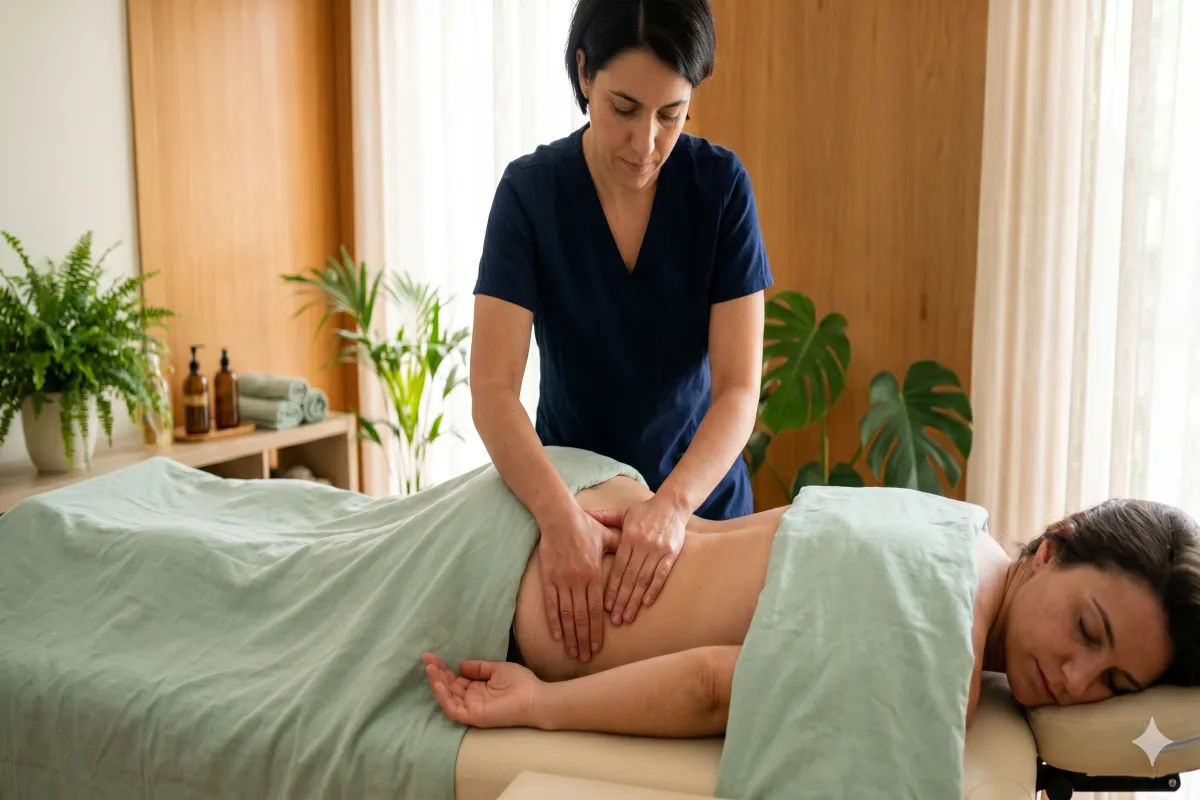
For those who train regularly—whether running, weight training, team sports, or high-intensity activities—recovery is just as important as the training itself. Sports massage is one of the most effective tools for accelerating recovery, reducing injury risk, and improving long-term performance.
What is sports massage?
Sports massage is a specialized approach, different from relaxing massage. It works with more dynamic and specific techniques to:
- Prepare muscles before intense effort
- Accelerate muscle recovery after effort
- Reduce inflammation and microinjuries
- Restore range of motion
- Prevent chronic overuse injuries
Why do athletes need sports massage?
Accelerated recovery
After intense training, muscles undergo normal microinjuries that cause inflammation and soreness (DOMS—Delayed Onset Muscle Soreness). Massage reduces this process, allowing faster recovery and return to training in fewer days.
Injury reduction
Unresolved muscle tension accumulates and creates weak points—areas where injuries are more likely. Regular sports massage sessions identify and treat these risk zones before they become serious problems.
Improved performance
Relaxed and well-recovered muscles function better. Athletes who receive massage regularly report better flexibility, strength, and endurance throughout the season.
Fatigue management
Chronic intense training leaves the body in a constant state of "alert." Sports massage activates the parasympathetic system (rest and recovery), balancing the physical stress of training.
Timing: When to schedule sports massage?
Before competition or intense effort (24-48 hours before)
A pre-event massage session prepares muscles, improves circulation, and increases range of motion. Ideal: 48 hours before, with light to moderate pressure.
After intense effort (24-72 hours after)
This is when DOMS is greatest; massage accelerates removal of training metabolites and reduces soreness. Best done in the first 3 days post-effort.
Regular maintenance (weekly or fortnightly)
For athletes in season, one session per week prevents tension accumulation and injuries. Ideal: day after hard training, not on competition day.
Techniques used in sports massage
Warming-up techniques
Increase circulation and prepare tissue for deeper work.
Deep tissue work
Firm pressure on deep muscle layers to release restrictions and tension points.
Myofascial release
Work on the fascia (membrane surrounding muscles) to restore mobility and reduce compensations.
Passive sports stretching
The massage therapist guides the limb through stretches to restore post-training range of motion.
Lymphatic drainage
Rhythmic movements that help the body drain inflammation and residual metabolites from effort.
How long until you feel effects?
- First session: Immediate relief of tension and inflammation
- After 3-4 sessions: Measurable reduction in DOMS and injuries
- With weekly regularity: Sustained performance improvement within 4-6 weeks
How to integrate sports massage into your training program
Typical week for athlete in intense training:
- Monday: Hard training + massage 24 hours later
- Wednesday: Moderate training (no massage)
- Friday: Intense training + massage 24-48 hours later
- Sunday: Rest
Before competition:
- Regular maintenance (2-4 weeks before)
- Light session 48 hours before competition
- Avoid massage on competition day
Post-injury or recovery:
- Coordinate with physiotherapy
- Gentle massage in first 3-5 days
- Progressive intensity as healing occurs
What to expect in a sports massage session
- Initial evaluation: The massage therapist asks about your training routine, problem areas, and goals
- Specific work: Focus on areas most stressed by your sport
- Varied techniques: Pressure, stretching, dynamic movements—not just "relaxation"
- Recommendations: Stretches or habits to maintain effects between sessions
- Duration: 60-90 minutes depending on needs
Signs that you have training-related pain that benefits from massage
- Stiffness lasting more than 3-4 days after hard training
- Pain that always returns in the same area
- Gradual reduction in range of motion
- Sensation of a "knot" or localized painful point
- Performance declining despite consistent training
The science behind: Why it works
Sports massage works on several levels:
- Circulation: Increases blood and oxygen flow to muscles
- Inflammation: Reduces inflammation markers (IL-6, TNF-α)
- Neurological: Activates proprioception (body awareness), improving movement
- Psychological: Reduces stress and mental fatigue associated with intense training
Studies show that athletes who receive massage regularly have 25-30% fewer injuries and recover 15-20% faster from intense effort.
Conclusion
Sports massage is not a luxury; it is a prevention and performance tool. Athletes who consistently integrate it into their training program see improvements in strength, endurance, and most importantly, in their ability to train without injuries.
If you train regularly and find that recovery is slow or that injuries repeat, book your sports massage session with Diana in Lisbon. She can work with you to create a massage plan adapted to your sport and competition calendar.